
EPDM Rubber Flooring for Kids Play Areas: Safety, Thickness and Fall Heights Explained
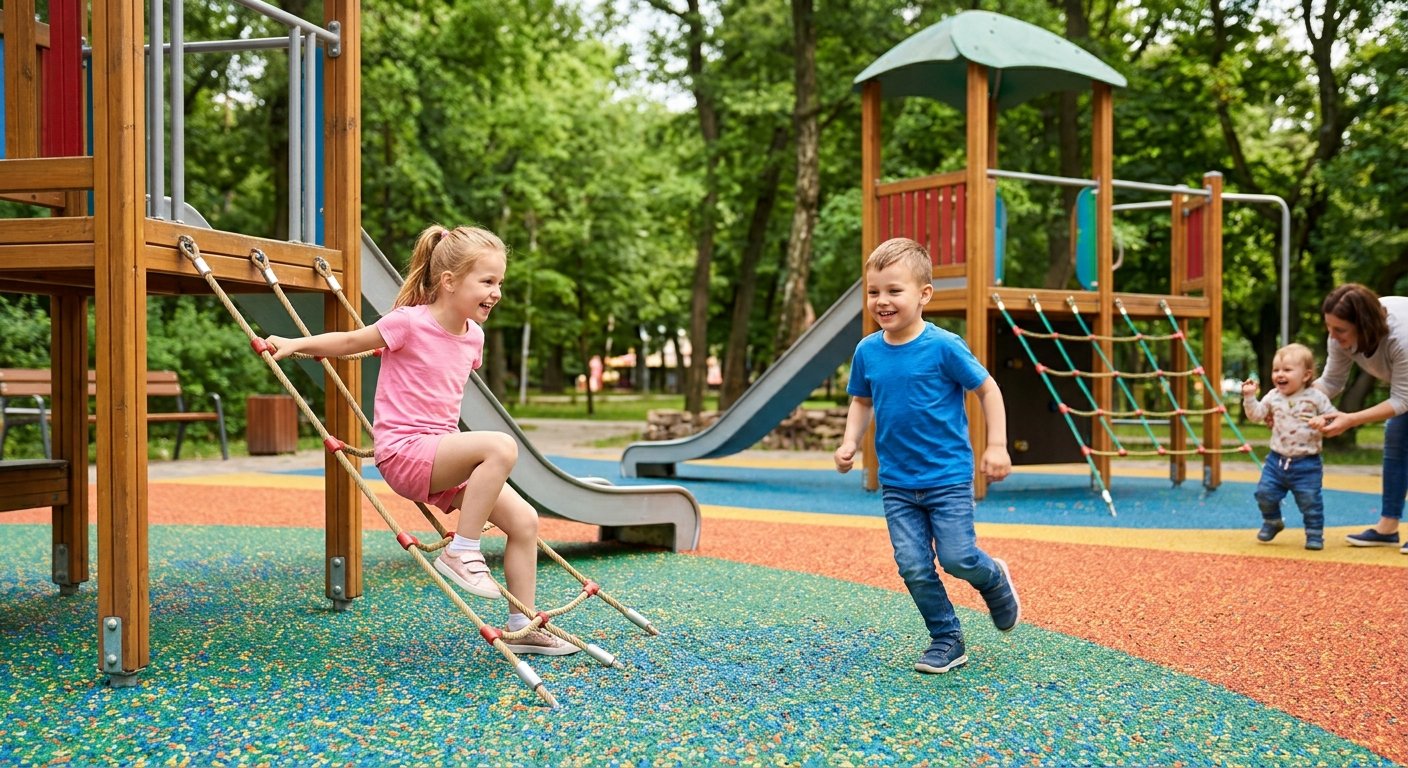
EPDM rubber flooring is a seamless, poured safety surface made of coloured EPDM granules bound with polyurethane, usually laid over a thicker shock-absorbing SBR base layer. Its job is simple and serious: reduce the chance of head injury when a child falls. The thickness you need depends on the highest point a child can fall from, called the critical fall height. Parents see the colours. Facility managers see the bill. The engineer has to see the drop from the top of the climbing frame, because that number decides everything else.
What is critical fall height?
Critical fall height is the greatest height from which a surface has been tested to reduce the risk of serious head injury to an acceptable level. Under the European standard EN 1177, a surface is drop-tested with an instrumented headform, and the result is measured as HIC (Head Injury Criterion). The critical fall height is the height at which HIC reaches 1000.
So a surface isn’t “safe” in general. It’s safe up to a tested height. A 40mm surface that works under a toddler slide may be inadequate under a 2.5m climbing net.
How thick should EPDM playground flooring be?
The exact thickness comes from the tested performance of the specific system, but these indicative figures help you plan.
| Highest fall point | Indicative total thickness (SBR base + EPDM top) |
|---|---|
| Up to about 1.0m | 30–40mm |
| About 1.5m | 45–60mm |
| About 2.0m | 60–80mm |
| About 2.5–3.0m | 90–120mm |
The top EPDM wearing layer is typically 10–15mm. The rest is the SBR base, which does most of the shock absorption. Always ask your supplier for the EN 1177 test report for the exact build-up they’re proposing, at the thickness they’re proposing.
Where the safety surface must go
The surface must cover the impact area around each piece of equipment, not only the area directly underneath it. Swings in particular throw children forward and backward, so the impact zone extends well beyond the frame. The equipment standard EN 1176 sets these zones. We map them on the layout before we pour, so thicker sections go exactly where the fall risk is.
Varying thickness across one play area is normal. It saves money and keeps the surface level, because the change happens in the base layer underneath.
EPDM in the UAE: heat, sun and colour
Outdoor play surfaces here face two problems. Heat and fading.
Dark EPDM in direct afternoon sun can become uncomfortably hot to touch, and small children sit, crawl and lie on it. Lighter colours absorb less heat. Shade structures make the biggest difference by far, and we recommend them over any outdoor play area that will be used in daytime from May to October.
UV fades colour and can make the binder brittle over time. Aromatic binders yellow in sunlight. For bright colours that need to stay bright, aliphatic (UV-stable) binders cost more and are worth it. Ask which one is in your quote.
Why EPDM rather than tiles, sand or turf?
Sand is cheap and absorbs falls, but it compacts, hides litter, gets into everything and needs constant raking. Rubber tiles work but have joints that can lift. Artificial grass with a shock pad is a good option for natural-looking areas. Poured EPDM wins where you want a seamless surface with custom shapes, games printed into the colours and easy wheelchair and stroller access.
That last point matters more than people expect. A seamless, flush surface makes a play area usable by children with mobility aids.
Maintenance and lifespan
A well-installed EPDM surface typically lasts eight to ten years outdoors. Keep it swept, wash it occasionally, and check for loose granules at high-wear points such as the bottom of slides and under swings. Small repairs are simple if done early. Left alone, a worn patch becomes a hole, and a hole under a swing removes the very protection the surface was installed for.
We can also apply a fresh top coat to extend life and restore colour.
See our full kids play area design and installation service, and compare EPDM with PU, acrylic and modular systems on our sports flooring page.
Frequently asked questions
1. What is EPDM playground flooring?
A seamless poured surface of coloured EPDM rubber granules bound with polyurethane, usually over an SBR shock-absorbing base.
2. How thick should EPDM be under play equipment?
It depends on the critical fall height. As a guide, about 30–40mm for 1m falls and 90mm or more for 2.5–3m falls, confirmed by the system’s test report.
3. What is EN 1177?
The European standard for testing impact-attenuating playground surfaces and determining their critical fall height.
4. Is EPDM flooring safe for toddlers?
Yes, when it’s installed to the correct thickness for the equipment and kept in good repair.
5. Does EPDM get hot in the UAE?
It can, especially in dark colours in direct sun. Lighter colours and shade structures reduce surface temperatures significantly.
6. How long does EPDM playground flooring last?
Typically eight to ten years outdoors with regular maintenance, and longer indoors.
7. Can EPDM be installed over existing concrete?
Yes, if the concrete is sound, clean and drains properly. We prime it before installing the base and top layers.
8. Is EPDM flooring wheelchair accessible?
Yes. A seamless, flush EPDM surface is one of the most accessible playground surfaces available.
9. Will the colours fade?
All colours fade slowly in UAE sun. UV-stable aliphatic binders and quality pigments keep them bright far longer.
10. Can you add games and designs into EPDM?
Yes. Hopscotch, numbers, tracks and custom logos can be poured directly into the surface in different colours.