Sports Court Maintenance in the UAE: A Practical Schedule for Turf, Glass, Acrylic and PU
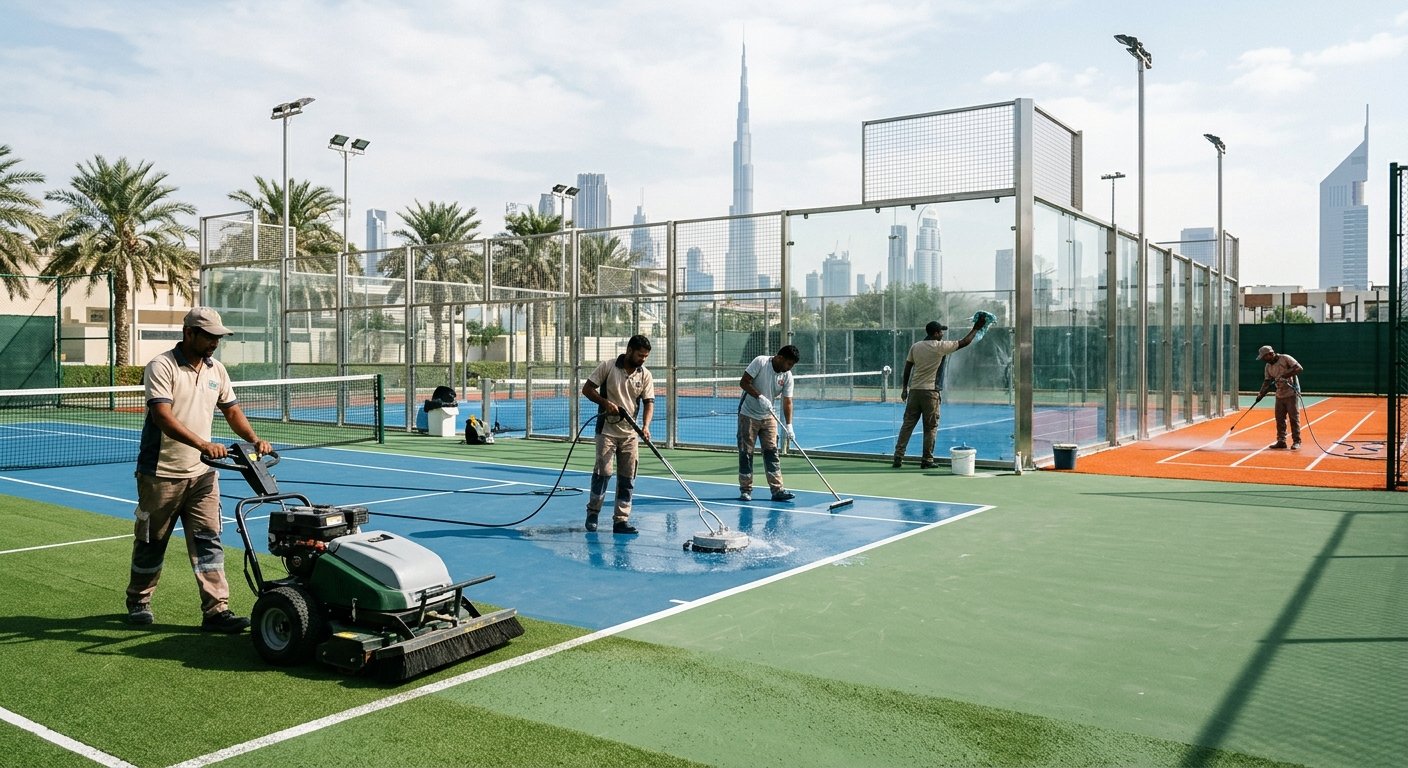
Quick answer: Most sports surfaces in the UAE need light cleaning every week, a closer inspection every month and a professional service at least once a year, ideally just before the busy October-to-April season. Sand, UV and heat are the three enemies. Regular brushing and early repairs are the cheapest defence against all three. The UAE is hard on sports surfaces in a way most manufacturer manuals don’t fully account for. A turf system designed in northern Europe expects rain to wash it. Here, it gets fine desert dust instead, every day, and summer surface temperatures far above anything it sees in Europe. Coastal humidity adds condensation and salt to the mix. We maintain courts across all seven Emirates, and the pattern is always the same. Owners who brush and inspect routinely get years more from the same surface. Owners who wait for a problem end up paying for a resurface.
Maintenance schedule by surface
| Surface | Weekly | Monthly | Yearly (professional) |
|---|---|---|---|
| Padel court | Brush turf, clear debris, wipe glass at eye level | Check infill depth, net tension, door hinges, bolts | Deep turf clean, infill top-up, structure and glass inspection, lighting check |
| Artificial turf pitch | Drag-brush, remove litter, check seams in goalmouths | Level infill in high-wear zones, inspect lines | Decompaction, infill top-up, seam repairs, drainage check |
| Acrylic court | Blow or sweep dust and sand | Wash with low-pressure water, check cracks | Crack repair, clean; recoat every 4–8 years |
| PU hall floor | Dust-mop, damp-clean with neutral cleaner | Machine-scrub | Deep clean, recoat top layer as needed |
| EPDM play area | Sweep, remove sharp debris | Check high-wear points under swings and slides | Repair worn patches, consider a refresh coat |
| Running track | Blow off sand and leaves | Low-pressure wash, check lines | Deep clean, repair, re-line; re-coat when texture wears |
Padel courts: sand, glass and structure
Padel turf works because sand infill holds the fibres up and gives the ball a consistent bounce. When the infill thins, the ball skids and players start slipping. Brush weekly so the sand spreads evenly, and check depth monthly in the service boxes and along the back glass, where it wears first.
Glass needs cleaning more often than in Europe because dust settles fast and humidity leaves water marks. Use soft cloths and non-abrasive cleaners. Inspect the structure for loose bolts and early rust spots twice a year, especially within a few kilometres of the coast.
Artificial turf pitches: keep the infill moving
Infill compacts over time, and compacted infill turns a soft pitch hard. Regular brushing keeps it loose. Annual decompaction with specialist equipment restores the surface feel. Goalmouths, penalty spots and corner flags wear fastest and need infill top-ups first.
Keep chewing gum, sunflower seeds and drinks off the pitch. They sound trivial. They contaminate infill quickly.
Acrylic and PU surfaces: cleaning and recoating
Acrylic courts lose grip when fine sand sits on the surface, because players are effectively running on ball bearings. Blow or sweep regularly, especially after windy days. Wash with low-pressure water. High-pressure jets damage acrylic coatings.
Indoor PU floors stay in top condition with dust-mopping and the right neutral cleaner. Aggressive chemicals strip the protective top coat and make the floor slippery, which is the opposite of what you want before a futsal session.
When to repair and when to resurface
Repair early. A small crack in an acrylic court, a loose seam in a turf pitch or a lifting edge on an EPDM area costs very little to fix in the first month. Leave it through one summer and heat, water and use make it much bigger.
Resurface when the surface itself is worn rather than damaged. Signs include turf fibres flattened across large areas, acrylic texture worn smooth, PU top coat worn through to the base, or track granules lost across whole lanes.
The best time for annual maintenance in the UAE
September. Courts are quiet at the end of summer, and a full service then means every surface is in top condition for the busy cooler season. It also catches heat damage from the summer before it turns into a winter problem.
We offer scheduled maintenance plans with 24/7 support for venues that can’t afford downtime. See our sports hall build and maintenance service, and the cleaning, recoating and resurfacing we provide for every flooring system on our sports flooring page.
Frequently asked questions
1. How often should a padel court be maintained?
Brush the turf weekly, check infill and hardware monthly and book a professional service at least once a year.
2. How do I clean padel court glass?
Use soft cloths, clean water and a non-abrasive glass cleaner. Avoid scrapers and abrasive pads.
3. How often does artificial turf need infill top-ups?
High-use pitches usually need top-ups in high-wear zones every few months and a general top-up annually.
4. Can I pressure wash an acrylic court?
Use low pressure only. High-pressure jets can damage the acrylic layers.
5. How often should an acrylic court be recoated?
Typically every four to eight years, depending on use and sun exposure.
6. What cleaner should I use on a PU sports floor?
A neutral pH cleaner recommended by the flooring manufacturer. Harsh chemicals strip the top coat.
7. What is turf decompaction?
A process that loosens compacted infill using specialist equipment, restoring softness and drainage.
8. When is the best time for annual court maintenance in the UAE?
Late summer, usually September, before the busy cooler season starts.
9. How do I know when a court needs resurfacing?
When wear is general rather than local: flattened turf, smooth acrylic, worn-through PU or lost track granules across large areas.
10. Does Forsan maintain courts it didn’t build?
Yes. We inspect and maintain sports surfaces across the UAE, whoever installed them.